
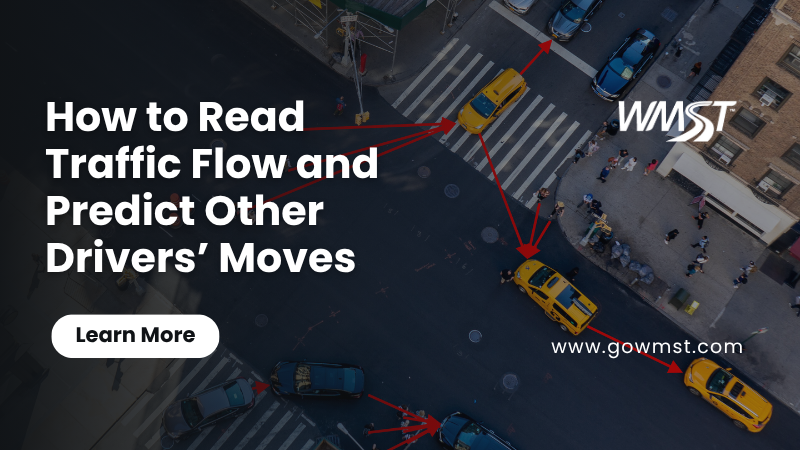
Driving isn’t just about operating a car; it’s about navigating a complex, fast-moving environment filled with other people. The best drivers aren’t the ones who react the fastest—they’re the ones who see what’s going to happen before it does.
This skill is called situational awareness driving. It’s the ability to read the “body language” of other vehicles and anticipate their next move. This is the foundation of defensive driving habits and the single most important skill for staying safe on Washington roads.
Why Traffic Awareness Is the Foundation of Safe Driving
Traffic awareness training in WA is critical because it moves you from being a reactive driver to a proactive one.
- A reactive driver sees a car’s brake lights, then slams on their own brakes.
- A proactive driver sees a car approaching a stale green light, anticipates they might brake suddenly, and has already eased off the gas.
Being proactive gives you the one thing that prevents almost all collisions: time. When you can predict that a car is about to pull out from a side street or change lanes without signaling, you’ve already prepared your response. You aren’t surprised, so you don’t have to panic.
How to Anticipate Driver Behavior at Intersections?
Intersections are one of the most common places for collisions because so many drivers are in a hurry, distracted, or confused. To stay safe, you must learn to read road behavior.
Look for these cues:
- The “Slow-Down” for No Reason: A driver in the lane next to you suddenly slows down, even though the path ahead is clear. This is a huge red flag that they are about to turn or change lanes, often without a signal.
- The “Head-Check”: You see a driver at a side street look left, then right, then left again. This often means they are looking through you and are about to pull out, assuming you’ll stop. Never assume they’ve seen you.
- The “Lane-Drift”: A car begins to drift toward one side of its lane. This is a tell-tale sign of a distracted driver (on their phone) or a driver preparing to change lanes.
- Front Wheels: This is an advanced tip. Always watch a car’s front wheels, not just the car itself. At an intersection, if a car’s wheels are turned, they are committed to going that way—even if their signal isn’t on.
- The “Gap-Hunter”: In heavy traffic, a car with a turn signal on is looking for any gap. If you leave a large space, assume they will try to take it.
WMST’s Step-by-Step Situational Awareness Training
At WMST, we believe situational awareness driving is a skill that must be trained, not just learned from a book. Our program is built to develop these proactive habits.
- We Build the Foundation: Our high-quality, nationally-based curriculum teaches you what to look for, from reading road signs far in advance to understanding right-of-way at complex intersections.
- We Implement in the Real World: This is where our six full hours of actual behind-the-wheel instruction are critical. Our instructors provide WMST advanced lessons in real time, coaching you to:
- “Scan 10-15 seconds ahead,” not just at the car in front of you.
- Identify potential hazards before they become emergencies.
- Continually plan what you will do if a situation develops based on what you think could happen (I.e. “I can see a blind driveway, but I can’t see if there is a car there or not. If a car does pull out, I will check my rearview mirror and cover the brakes.”
- Check your mirrors every 5-8 seconds to know what’s always around you.
- We Give You the Tool: We teach the 4-second following distance for new drivers. This isn’t just a random number. It’s a physical buffer that guarantees you have the time and space to react, even when the driver in front of you does something completely unpredictable.
Frequently Asked Questions (FAQs)
What does “defensive driving” really mean?
Defensive driving means driving to save lives, time, and money, in spite of the conditions around you and the actions of others. It’s a set of habits where you assume other drivers might make mistakes and you leave yourself an “out”—like maintaining a safe following distance—so their mistake doesn’t become your accident.
How can I tell if a car will change lanes suddenly?
Look for a cluster of small cues. The driver may look over their shoulder, drift toward one side of their lane, or slow down unexpectedly. Often, the most dangerous drivers will do this without a turn signal. If a car is “riding” the lane line, be prepared for them to cross it.
Do WMST lessons include real traffic awareness training?
Yes, it’s a core part of our program. During your six full hours of behind-the-wheel instruction, our trainers actively coach you on real-world traffic awareness training in WA. We move beyond the basics of the Skills Test to teach you how to scan traffic, predict behavior at busy intersections, and manage the 4-second following distance to stay safe.
How do I build faster reaction time while driving?
You build a “faster” reaction not by speeding up your foot, but by giving your brain more time to process. The best way to do this is to scan farther down the road (10-15 seconds ahead). This lets you see a problem developing before it’s on your bumper. Maintaining a 4-second following distance is the easiest way to give yourself the time to see, process, and react smoothly.
 EN
EN  ES
ES  RU
RU  FR
FR  JA
JA  AR
AR  VI
VI