
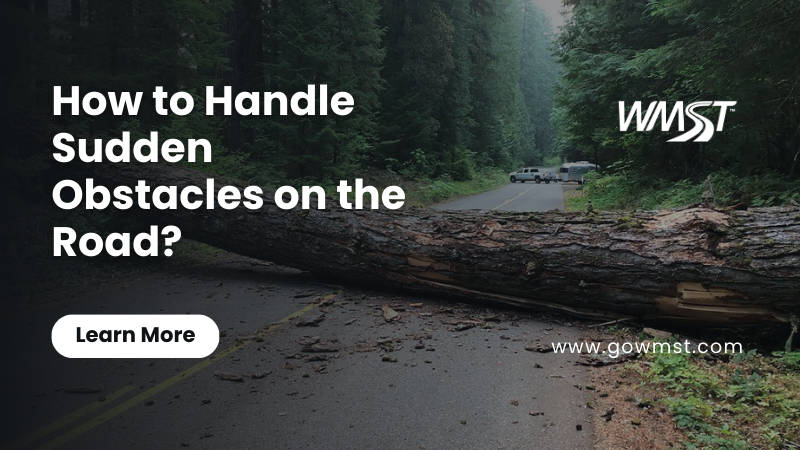
Driving is predictable—until it isn’t. A deer darting from the woods, a ball rolling into the street, or a ladder falling off the truck ahead can transform a calm commute into an emergency in milliseconds.
For new drivers, these moments are the ultimate test. Without the muscle memory that comes from experience, panic often takes over. This is why emergency reaction training WA instructors provide is so vital. It transforms a “freeze” response into a calculated action. This guide explains how to spot trouble early and how to make the split-second swerve vs. stop decisions that prevent collisions.
Why Quick Reaction Skills Matter for New Drivers
Statistics show that new drivers are not necessarily involved in more accidents because they are “bad” drivers, but because they are “slow” perceivers.
- Processing Time: An experienced driver sees a hazard and reacts in about 0.7 seconds. A novice may take up to 2 seconds to recognize the threat. At 40 mph, that delay equals traveling an extra 80 feet blind.
- Panic Braking: Without quick braking skills, beginners often slam on the brakes too hard (locking wheels) or too soft (not stopping in time).
- Target Fixation: In an emergency, humans tend to stare at the object they are afraid of hitting. Unfortunately, your hands steer where your eyes look, leading you directly into the crash.
How to Identify and Predict Sudden Hazards?
The best way to handle an obstacle is to see it before it becomes one. This is the core of hazard perception driving WA standards emphasize.
- Scan the Shoulders: In wooded areas (like many WA backroads), don’t just watch the asphalt. Scan the tree line for movement or “eye shine” from animals.
- Watch the Shadows: In residential areas, look under parked cars. If you see feet or shadows, a pedestrian is likely about to step out.
- The “Truck Buffer”: If you are following a truck carrying a load, double your following distance. If something falls off, you need time to react without swerving blindly.
Visit: The Future of Driving Tests in WA: What’s Changing in 2026
Emergency Braking vs. Controlled Swerving
When an obstacle appears, you have two options: stop or steer. Knowing which to choose is a life-saving skill.
Option A: The Emergency Stop (Threshold Braking)
- When to use: The obstacle is far enough away to stop, or swerving would put you into oncoming traffic.
- How to do it: Apply firm, steady pressure to the brake pedal. Do not “pump” the brakes (your car’s ABS will prevent skidding). Keep the steering wheel straight.
Option B: The Swerve (Evasive Steering)
- When to use: You are too close to stop, and there is a clear escape path (an open lane or shoulder).
- How to do it: Grip the wheel firmly. Steer quickly in one direction to clear the obstacle, then immediately steer back to straighten the car.
- The Golden Rule: Never swerve if you haven’t checked your blind spot. Hitting a car in the next lane is often worse than hitting a stationary object.
Visit: How to Read the Road Like a Pro: Developing Predictive Driving Skills
How WMST Develops Safe Response Habits
You cannot learn emergency maneuvers from a textbook. You have to feel the physics of the car. WMST defensive driving courses provide a safe environment to push these limits.
- Controlled Environment: We practice hard braking and object avoidance in large, empty lots where there is no risk of hitting anything.
- ABS Experience: We let students feel the brake pedal vibrate during an ABS stop so they don’t think the car is breaking and release the pedal during a real emergency.
- Vision Training: We drill students to “look for the gap, not the obstacle,” breaking the habit of target fixation.
Frequently Asked Questions (FAQs)
What should I do if an animal runs onto the road?
The general rule is: Brake, do not swerve. Swerving for a small animal (like a squirrel or cat) often leads to hitting a tree or an oncoming car, which is far more dangerous. For large animals (deer/elk), brake hard, but let off the brake just prior to impact. Make sure to stay in your lane.
Is swerving safe for beginners?
Swerving is a high-risk maneuver. Beginners often over-correct, causing the car to spin out or roll over. It should only be used as a last resort when stopping is impossible and the escape path is 100% clear.
Do WA tests include hazard perception?
While the test doesn’t simulate a deer jumping out, examiners do grade you on how you react to real-world hazards (like a car pulling out or a pedestrian). Failing to react or reacting too late creates a “Dangerous Action” fail.
Does WMST teach emergency stops?
Yes. We believe every student should know what maximum braking feels like. We practice “Command Stops” where the instructor gives a sudden cue to stop safely and quickly.
How can I improve my reaction time?
Fitness and rest play a huge role (fatigue slows you down), but the biggest factor is vision. By looking 15 seconds ahead rather than 2 seconds ahead, you buy yourself more time to react, effectively “improving” your reaction speed.
Ready to master the unexpected? Don’t wait for an emergency to test your skills. Sign up for a WMST lesson today and learn how to handle the road with professional confidence.
 EN
EN  ES
ES  RU
RU  FR
FR  JA
JA  AR
AR  VI
VI