
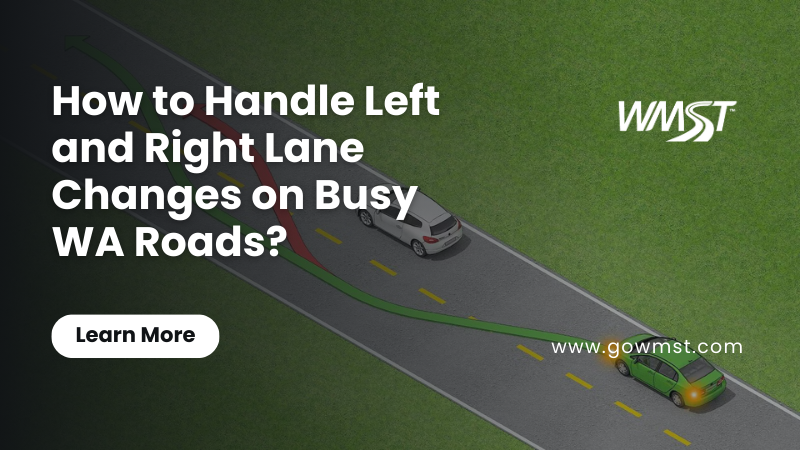
For many learner drivers, the instruction “Please change lanes to the left” causes an immediate spike in heart rate. On busy Washington arterials like Highway 99 or the fast-moving I-5, finding a gap in traffic can feel impossible.
However, a lane change is a structured maneuver, not a leap of faith. By breaking the process down into specific steps and mastering your observation skills, you can glide between lanes safely. This guide covers the essentials of lane change safety WA roads require, helping you move with confidence rather than hesitation.
Why Lane Changes Are Critical for Safety
Improper lane changes are a leading cause of sideswipe collisions. Unlike a rear-end crash at a stoplight, these accidents often happen at high speeds.
- The “Blind” Move: Relying solely on mirrors is the most dangerous habit a driver can form.
- Speed Differential: Changing lanes while moving significantly slower than the traffic flow forces other drivers to slam on their brakes, creating a chain reaction of danger.
- Indecision: Drifting halfway into a lane and then jerking back is confusing and dangerous for everyone around you. Consistency and clarity are key.
Step-by-Step Guide for Safe Lane Switching
To execute a safe lane change, memorize the SMOG technique. This is the industry standard for signaling, mirror checks, and execution.
- S – Signal: Communicate your intent early. In Washington, you should signal for at least 100 feet before moving. This asks other drivers for permission to enter their space.
- M – Mirrors: Check your rearview mirror first to see the overall traffic picture, then check the side mirror of the direction you want to go.
- O – Over the Shoulder (Head Check): This is non-negotiable. Turn your chin to your shoulder to look directly into the blind spot your mirrors cannot see.
- G – Go: If the path is clear, maintain your speed (or accelerate slightly) and glide smoothly into the center of the new lane. Cancel your signal once you are established.
How to Check Blind Spots Effectively
The “Blind Spot” is the area alongside your car that is hidden from your mirrors. No matter how well you adjust your mirrors, it exists.
- The Chin-to-Shoulder Rule: Do not just glance with your eyes; physically turn your head until your chin is over your shoulder. You are looking out the rear side window.
- Don’t Turn the Wheel: A common mistake beginners make is turning the steering wheel while they turn their head. Keep your hands steady and the wheel straight while you look.
- Traffic Gap Judgment: You are looking for a gap large enough for your car plus a safety buffer. If you can see the headlights of the car in the next lane in your rearview mirror, you generally have enough space to move over.
WMST Lane Change Practice Methods
Reading about SMOG is different from doing it at 60 mph. WMST lane training bridges that gap.
- 360 Degree Awareness: The secret to easy lane changes is knowing exactly what is going on with traffic around you before you begin the lane change process. Knowing ahead of time where a safe gap in traffic is will allow you to make non-hurried adjustments to align with the space and speed of adjacent traffic.
- Commentary Driving: We ask students to verbally call out “Signal, Mirror, Head Check” as they do it. This builds the neurological pathway for the habit.
- Graduated Difficulty: We start lane changes on quiet, multi-lane boulevards with large gaps. Once the student masters the mechanics, we move to busier times and tighter gaps to practice judgment.
- Speed Maintenance: We train students to keep their foot on the gas during the check. Many beginners unconsciously slow down when checking mirrors, which closes the gap they were trying to enter.
Frequently Asked Questions (FAQs)
How do I know when it’s safe to change lanes?
You need a gap of roughly 4 to 6 seconds. A good rule of thumb: if you can see the entire front of the vehicle behind you in your rearview mirror (not just the side mirror), you likely have enough space to merge safely.
Can lane change mistakes cause test fails?
Yes. Failing to check your blind spot (head check) or failing to signal before moving are considered “Dangerous Actions” and usually result in an automatic failure on the WA Skills Test.
Is signaling required for every lane change?
Yes. WA law requires you to signal your intention to change lanes every single time, even if you think no one is around. It builds the habit and ensures safety for unseen cars or cyclists.
Does WMST simulate real traffic for lane changes?
We don’t just simulate it; we drive in it. Advanced lessons take place on real highways and arterials. We teach you how to merge with real trucks and commuters, providing real-time feedback on your timing.
How can beginners reduce hesitation?
Hesitation comes from uncertainty. By strictly following the SMOG routine, you remove the guesswork. Trust your eyes: if you have checked the mirrors and the blind spot and it is clear, commit to the move immediately. Delayed reactions lose the gap.
 EN
EN  ES
ES  RU
RU  FR
FR  JA
JA  AR
AR  VI
VI