
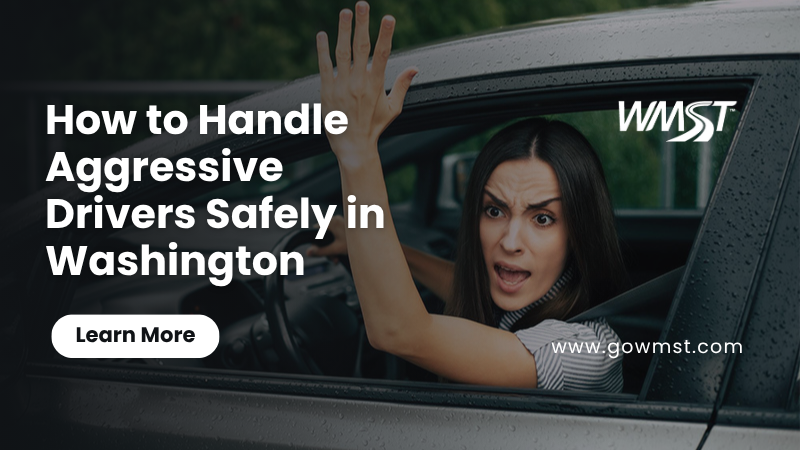
We’ve all been there. You’re driving in traffic, and suddenly, a car is on your bumper, weaving aggressively, or laying on the horn. Encountering an aggressive driver is one of the most stressful and dangerous situations a new driver can face.
Your first instinct might be frustration or anger, but the only safe response is a calm, defensive one. Dealing with aggressive drivers in WA isn’t about teaching someone a lesson; it’s about getting yourself, your passengers, and your vehicle to your destination safely.
Recognizing the Signs of Aggressive Driving
First, it’s important to know what aggressive driving looks like. It’s more than just a simple mistake; it’s a pattern of dangerous, intentional behavior.
Common signs include:
- Excessive speeding
- Tailgating (following too closely)
- Weaving in and out of traffic or making erratic lane changes
- “Brake checking” (slamming on the brakes in front of you)
- Flashing lights or using the horn excessively
- Making angry gestures or yelling
- Ignoring traffic signals and stop signs
These actions put everyone at risk. Your job is not to engage, but to protect yourself.
Visit: Understanding Washington’s Distracted Driving Laws
Safe Responses to Road Rage Situations
If you find yourself near an aggressive driver, follow these road rage prevention steps.
- DO NOT ENGAGE. This is the most important rule. Do not make eye contact, do not yell back, and do not make any gestures. Any engagement can be seen as a challenge and will escalate the situation.
- LET THEM PASS. If someone is tailgating you or trying to speed, the safest move is to get out of their way. When it’s safe, move into another lane and let them go. Your ego is not worth a collision.
- MAINTAIN YOUR SPACE. Create as much distance as possible between your car and the aggressive driver. If they are in front of you, slow down to increase your following distance (WMST teaches the 4-second following distance as a safe buffer).
- LOCK YOUR DOORS. This is a simple, proactive step that can prevent a verbal confrontation from becoming a physical one if you are stopped.
- DO NOT GO HOME. If you are being followed, do not lead the aggressive driver to your home or workplace. Drive to a public, well-lit place like a police station, fire station, or a busy shopping center.
Why Staying Calm Protects You and Others?
An aggressive driver is already in an unpredictable, emotional state. The one thing you have complete control over is your own reaction.
When you stay calm, you keep control of your vehicle. You are able to make smart, defensive decisions. If you let your own anger take over, you are no longer a defensive driver; you have become part of the problem. A calm, predictable driver is a safe driver.
WMST’s Defensive Driving for Stressful Situations
At WMST, we build our entire curriculum around preparing new drivers for real-world scenarios. We know that defensive driving responses are not just about theory; they are about muscle memory and confidence.
Our high-quality, nationally-based curriculum and six full hours of actual behind-the-wheel training are designed to build the confidence you need to handle stressful situations calmly. We teach our students proactive WMST safety strategies, like:
- The 4-Second Following Distance: This is our standard for new drivers. It gives you the time and space to react if a car in front of you (or an aggressive driver) brakes suddenly.
- Awareness and Planning: We teach you to constantly scan your environment. Seeing a potential hazard (like a weaving car) far in advance gives you time to create a safe plan, like changing lanes, before it becomes an emergency.
- Emotional Control: A core part of our training is reinforcing that a calm, focused driver is a safe driver. We emphasize that driving is a task of skill and responsibility, not emotion.
- Try Empathy: We have no idea why the other driver is putting themselves and everyone on the road at risk, but it helps our own mental state to assume the best. Maybe they are having a medical emergency or are late for the birth of their child.
Frequently Asked Questions (FAQs)
What should I do if someone tailgates me?
Do not “brake check” them. This is dangerous, illegal, and will escalate the situation. Your best response is to maintain a steady speed. When it is safe, signal and move to another lane to let them pass.
Is it safe to overtake a speeding driver?
No. It’s best to avoid them. Let them speed on and get out of your vicinity. Trying to “beat” them by overtaking them just puts you in a risky situation and may be seen as a challenge.
Can road rage lead to a test failure?
Yes, absolutely. A Skills Test examiner needs to see that you are a safe, calm, and predictable driver. Any display of aggressive driving, (like honking, tailgating, or speeding) or a panicked, unsafe reaction to another driver is grounds for an immediate test failure.
Does WMST teach techniques to stay calm on the road?
Yes. Staying calm is a core part of the defensive driving mindset we teach. Our instructors focus on building confidence through hands-on experience. By making you comfortable with the vehicle and various traffic situations during your six hours of behind-the-wheel training, we help reduce the anxiety that can lead to panic or frustration on the road.
 EN
EN  ES
ES  RU
RU  FR
FR  JA
JA  AR
AR  VI
VI